The first 48 hours: the launch-day plan that triggers the algorithm
The moment you have waited for is also the moment to work hardest. The list drives most of the first two days; the first two days decide whether the platform ever shows you to strangers.
The moment you have waited for is also the moment to work hardest. Your email list, the one you spent your ad budget building, drives the majority of revenue in the first 48 hours. On average you will see around a 2% conversion from the list, so 10,000 subscribers means roughly 200 backers out of the gate. Most converters act in week one, and the next surge comes in the final week, both powered by urgency. So go aggressive at both ends.
This article is the launch-day plan from the go-live chapter of the book: the 24 hours before, the hour-by-hour sequence, what to do when you hit the goal, and how to survive the quiet middle without panicking.
The 24 hours before you press go
Launch day planning starts the night before. The day you press go is not the day to be figuring out your email schedule, checking ad accounts or making page edits. Everything should be locked. The day before, send a "tomorrow we go live" email to the full list. Short and excited: one sentence on the product, one on when the campaign opens, one reminder that the early-bird price is limited. No link yet. The link goes in tomorrow's email, and keeping it out gives the platform team one more day to review the page before traffic arrives.
Then check that the campaign is approved and scheduled. Confirm the ads are built and paused, ready to switch on. Confirm the VIP group or Discord has been told the time. Confirm the first three campaign updates are drafted. Sleep.
Launch morning, hour by hour
Wake up before the campaign opens. Check that it actually went live at the scheduled time; technical hiccups happen and you want to catch them before the first email goes out. Once it is confirmed live, the VIP email goes first. Give it 30 to 60 minutes before the full-list email. That window is the VIPs' exclusive access, and the honor of being first matters to people who put down a deposit specifically to be first.
{{ hoursSvg }}After the full-list email, post everywhere you own: the VIP group, Discord, your personal accounts, BoardGameGeek if it is a game. Switch on the launch ads, retargeting first. Then do not sit down. Answer every comment on the campaign page within minutes. Reply to every message. Thank early birds publicly by name in the first update. The page is being watched by strangers now, and a creator who is visibly present converts them.
Why hitting 100% on day one is a strategy
Both platforms read momentum: how quickly you fund relative to goal, and how many people back per day. A campaign that hits its goal on day one gets flagged as interesting and surfaced in category newsletters, trending lists and editorial features. A campaign at 15% after a week does not. This is why the goal should be a number your list can clear in the first 48 hours, and why the whole pre-launch phase exists.
{{ momentumSvg }}The free traffic that follows is significant. Some of the best-performing campaigns I have worked on took 20 to 30% of total revenue from organic platform traffic after the funded-fast spike. The funded badge also changes how every new visitor reads the page. "Funded in six hours" at the top of the page is the strongest social proof you will ever have, and it is doing its work on every visitor for the next 29 days.
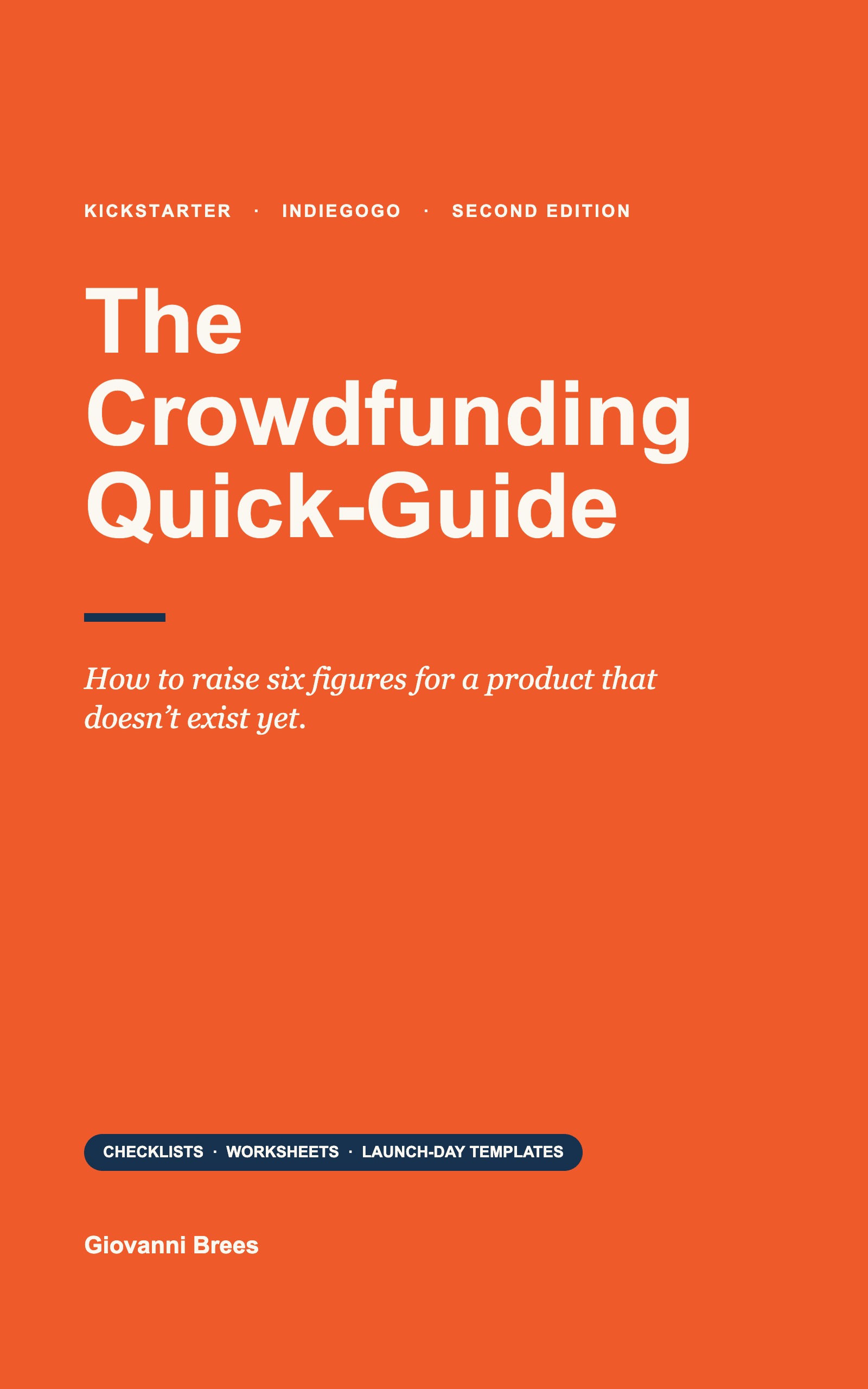
Chapter 3 covers the email sequence that feeds it. Chapter 17 covers what to do when something goes wrong.
Get the book on Amazon →Day two: the follow-up and phase-2 ads
On day two, send the follow-up email to everyone who didn't click yesterday. Subject line and first line: funded, and the early-bird tier is nearly gone. That email usually outperforms the launch email among the people who receive it, because now there is proof and scarcity in the same sentence.
Then change the ads. Pre-launch you were buying leads. Now you are buying pledges, and you have something new: a list of people who actually paid. Build 1% lookalike audiences from your VIPs and your backers, narrow them with interests like Kickstarter and Indiegogo so you reach people who already know how to back, and point them at the campaign page. This is how you scale spend without torching the return. Keep retargeting running throughout: page visitors who didn't pledge are the cheapest conversions you have.
Reward the early birds, publicly
Super-early-bird and limited rewards created the urgency that got you funded. Now honor them. Name early backers in the first update. Close the sold-out tier visibly rather than quietly extending it; nothing erodes trust faster than a "limited to 100" tier that somehow has 140 backers. If demand is strong, open a second, slightly less generous tier and say exactly why. Backers who trusted you first should be able to see that it paid off.
The quiet middle: weeks two and three
Every 30-day campaign has the same shape. Week one is electric. Week four is urgent. Weeks two and three are the quiet stretch: traffic drops, pledges slow, and first-time creators panic. Don't. This is normal. Your job in the middle is not to recreate the launch surge. It is to keep the project alive and visible while the two peaks do the heavy lifting.
{{ middleSvg }}In the middle, post campaign updates, which land in every backer's inbox and are the most reliable traffic you have. Engage every comment. Follow up with press that passed the first time, now with a funding number. Find cross-promotion partners among adjacent live campaigns; you each tell your backers about the other, and it costs nothing but a friendly message. Announce stretch goals one at a time, each with a proper update rather than a page edit. And keep the VIP group busy with behind-the-scenes content.
One underrated tactic: reach out personally to people who visited but didn't back. If you used tracking links, you can often identify subscribers who clicked the launch email but didn't complete a pledge. A short personal message, not a bulk email, converts a meaningful share: "Hey [name], I noticed you checked out the campaign last week. Was there anything that stopped you from backing? Happy to help." It is direct, it is human, and it works.
Stretch goals that restart momentum
A stretch goal is a target you announce after the main goal is hit; it unlocks something extra for every backer at a new threshold. Done well, it restarts a stalled campaign. Done badly, it looks like a made-up milestone and backers ignore it. The best ones add real value to what backers already bought: a new color, a bonus accessory, a feature the VIP community asked for. What doesn't work: vague promises, or "upgrades" that should have been in the product anyway. Keep it specific, make sure the margin survives it, and announce it with an update so every backer hears about it and has a reason to share.
The last 48 hours
The final two days mirror the first two. Both platforms send a reminder to everyone who clicked "remind me"; your job is to add to that. A "48 hours left" email to the whole list, a "last chance" email on the final morning, a final-day update, and a last push on retargeting ads to everyone who visited and didn't pledge. Expect roughly a third of your total to arrive in this window. Then, before the clock stops, make sure late pledges are switched on and the page knows what it is selling on day 31.
What to do if day one disappoints
Sometimes the list converts at 1% instead of 2% and the counter sits at 60% at midnight. The plan does not change. Send the day-two email anyway; the people who didn't click are still the warmest audience you have. Check the page with fresh eyes: is the price visible in the first screen, is the video loading, is there a confusing tier? Those are fixable in an hour. Message the VIPs who didn't back and ask why; their answers will tell you what the page is failing to say. Many funded campaigns clear the goal on day three or four rather than day one. What kills a campaign is not a slow day one. It is going quiet after it.
The launch-day checklist
Print this and put it next to the laptop. Campaign approved and scheduled, confirmed by opening the preview link on a phone that is not logged in. VIP email drafted, link tested, scheduled for the minute after go-live. Full-list email drafted and scheduled for 60 minutes later. Community posts written for every channel, with the campaign link and one image. Launch ads built, reviewed, paused, with budgets set and the tracking links in place. First update drafted: a thank-you with the first backers' names left blank to fill in. A second person assigned to comments for the first twelve hours so you can handle email and messages. A spreadsheet open with hourly pledge count, backer count and conversion from each email. And food in the fridge, because you will not leave the desk.
The two things people forget: time zones and the sold-out tier. Say the launch time in the VIPs' biggest time zones, not just yours. And decide in advance what happens when the Super Early Bird sells out in forty minutes, because it will. The answer is in the first update, written now: thank them, close it, point to the Early Bird.
Reading day one honestly
By midnight you will have four numbers, and together they tell you what to do tomorrow. Conversion from the VIP email, which should be many times higher than the general list; if it is not, the VIPs did not see the offer they reserved, so check the tier they were promised. Conversion from the full list, which should land around 2%; well below that usually means the page or the price, not the people. Share of pledges from platform traffic, which should be small on day one and start growing on day two if the momentum signal landed. And average pledge versus the number you planned on, which tells you whether the add-ons are working.
Do not change prices on day one. Do fix a broken video, a missing shipping line or a confusing tier the moment you spot it. And write the day-two email before you sleep, while the numbers are in front of you, because tomorrow morning you will be answering comments again.
Three launch-day mistakes that cost real pledges
Launching on a Friday afternoon. Your list opens email on weekday mornings, journalists publish on weekdays, and the platform teams that feature campaigns work office hours. Tuesday to Thursday, mid-morning in your biggest time zone, is where most funded campaigns go live. Changing the page during the surge. Every edit risks breaking something while a thousand people are looking at it. Fix only what is broken; save improvements for day three. Disappearing to celebrate. The first evening is when strangers from the platform start arriving, and a page with twenty unanswered comments tells them the creator is not home. Celebrate on day two, briefly, then get back to the comments.
Questions people ask
What should I do on Kickstarter launch day, hour by hour?
Confirm the campaign is live before anyone is told. Hour 0: email the VIP deposit list. Hour 1: email the full list, post in every community you own, switch on launch ads. Rest of day 1: answer every comment and message, thank early birds publicly. Day 2: follow-up email to non-clickers, start scaling phase-2 ads.
Why does funding fast on day one matter so much?
Both platforms read momentum, meaning funding speed relative to goal and backers per day. A campaign that hits 100% on day one gets surfaced in newsletters, trending lists and Projects We Love. That free traffic can be 20 to 30% of total revenue, and it only arrives after momentum is proven.
Should I send the launch email to everyone at once?
No. VIPs who paid a deposit get it first with a 30 to 60 minute exclusive window, because being first is what they paid for and the early-bird tier is limited. The general list follows. Spreading the sends also smooths the traffic spike.
What are phase-2 ads?
Once the goal is hit, build 1% lookalike audiences from your VIPs and actual backers, narrow them with interests like Kickstarter and Indiegogo so you reach people who already know how to back, and point them at the live campaign page. This scales spend without destroying return.
How do I keep momentum in the middle of the campaign?
Post campaign updates (they hit every backer's inbox), engage every comment, follow up with press that passed, arrange cross-promotions with adjacent campaigns, announce stretch goals one at a time, and send short personal messages to people who clicked but did not back.
What if I do not hit my goal on day one?
Keep working the plan: the follow-up email, the communities, the retargeting ads. Many funded campaigns clear the goal in week one rather than day one. What you cannot do is go quiet. If the list converts well below 2%, the problem is usually the page or the price, and both can be adjusted mid-campaign.
Launch day is one chapter. The book covers the ninety days before and the year after.
USP, pre-launch funnel, platform, pricing, the page, launch day, press and fulfillment. With a checklist at the end of every chapter.
Buy on Amazon →

Founder of BoostYourCampaign, one of the top three crowdfunding marketing agencies in the world, and author of The Crowdfunding Quick-Guide. His teams helped creators raise more than $600 million on Kickstarter and Indiegogo.