Meta ads for crowdfunding: the budget, the creative and the numbers to hit
Facebook and Instagram ads are how most modern campaigns build their pre-launch list. Done well, they turn spend into subscribers at a predictable cost. Done badly, they are a money incinerator. The difference is a system.
For the overwhelming majority of campaigns, paid social, and specifically Facebook and Instagram, is the engine that fills the pre-launch email list. Done well, it reliably turns advertising spend into subscribers at a predictable cost, which is the closest thing crowdfunding has to a growth lever you control. Done badly, it burns money. The difference is not luck or a secret audience. It is a disciplined structure, relentless creative testing, and reading the right numbers.
Before anything else, be clear about what you are optimizing for in pre-launch. You are not selling the product yet. It is not for sale. You are collecting email sign-ups, and ideally small VIP reservation deposits, at the lowest viable cost. That single goal shapes every decision below: the campaign objective, the audiences, the creative, and the metric you live or die by, which is cost per lead.
The foundation: the pixel and the lead event
Before you spend a dollar, install the Meta Pixel on your landing page and confirm it fires the right events: a page view, and crucially a lead event when someone submits their email. The pixel is how Meta learns who converts and finds you more people like them. Without it you are flying blind and the algorithm cannot optimize. This is non-negotiable plumbing. Set it up, submit the form yourself, watch the event fire, and only then start spending. A campaign run without a working pixel wastes both the money and the learning that money should buy.
While you are in there, set up the conversions API alongside the browser pixel if your landing page builder supports it. Browser-side tracking loses a share of events to privacy settings. Server-side tracking recovers most of them, and more complete data means the algorithm optimizes faster on a smaller budget.
Account structure: two campaigns, not fifty ad sets
Keep the account clean, because structure is what lets you read results and scale what works. At the simplest you want spending split by purpose. A prospecting campaign shows ads to cold audiences who have never heard of you; this does the heavy lifting of list-building. A retargeting campaign re-engages people who visited your page or watched your video but did not sign up. Within prospecting, test a few distinct audiences and a set of creatives.
{{ structureSvg }}Don't over-engineer it. A sprawling account with fifty tiny ad sets starves each one of the data it needs to optimize. A few well-funded ad sets beat many starved ones. The campaign level controls the objective (leads) and the budget strategy. The ad set controls the audience, placements and budget; that is where you test who to target. The ad controls the creative; that is where you test what to say.
Audiences: cold, lookalike and warm, in that order
There are three audience types and you use them in sequence. Interest-based cold audiences are strangers Meta targets by stated interests, behaviors and demographics. They are your starting point when you have no data, built around the interests your ideal buyer would have. Lookalike audiences are strangers who resemble a source group you provide. They are powerful, but only as good as the source: a lookalike built from people who actually signed up or paid a deposit is far stronger than one built from a follower list. Warm audiences are people who already engaged, such as page visitors, video viewers and social engagers. They convert at the lowest cost because they already know you.
Early on you start with interests because you have nothing else. As sign-ups accumulate, you build lookalikes from your leads and they typically outperform. The mistake is spending everything on cold traffic and never retargeting the warm audience you paid to create.
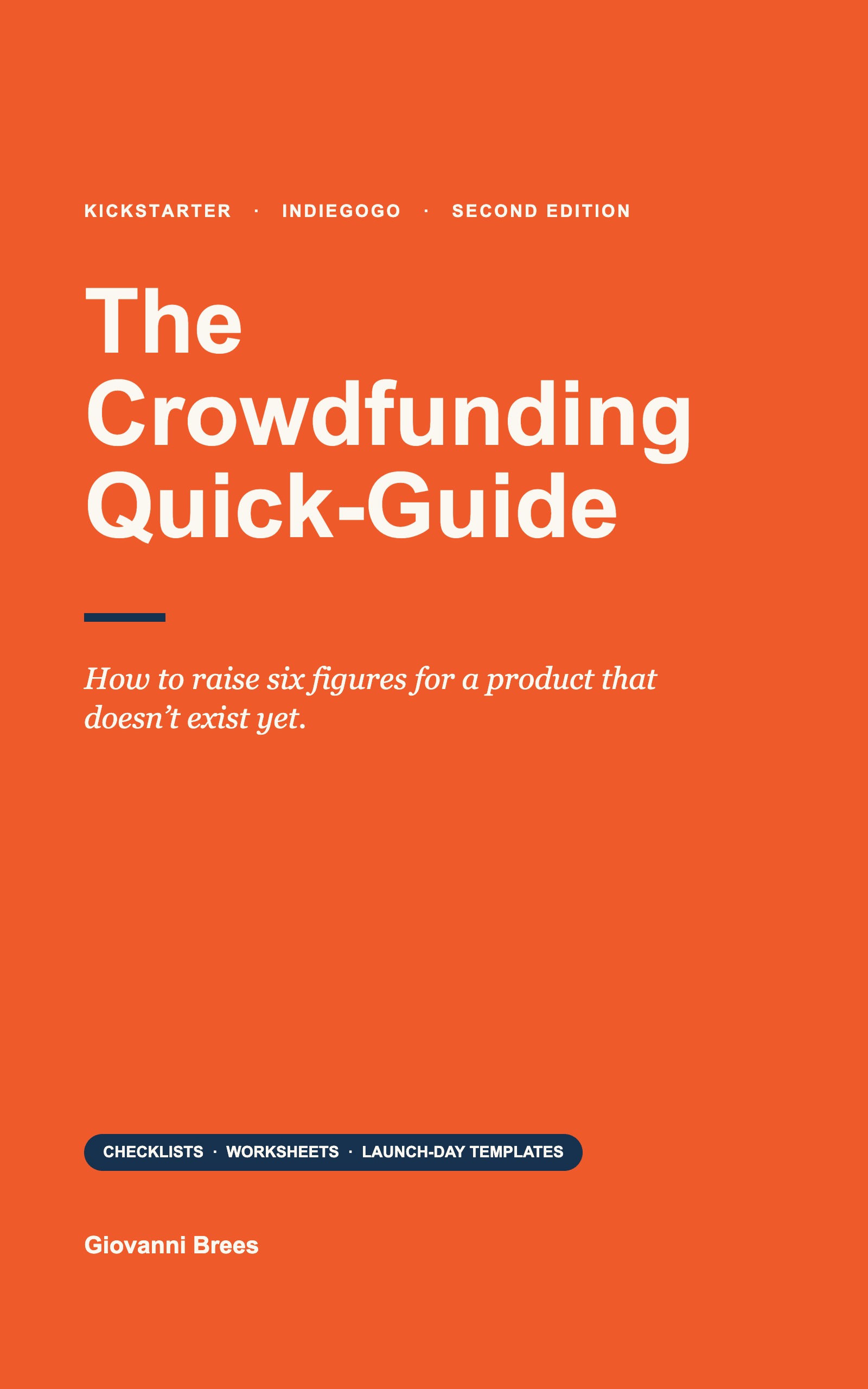
Chapter 4 covers creative, PR and influencers alongside it. Chapter 7 tells you how much to budget.
Get the book on Amazon →Creative is the real lever
Here is the truth that surprises most first-timers. In modern Meta advertising the creative, the image or video and the words on it, is by far the biggest driver of results. Targeting matters, but the algorithm is now so good at finding the right people that your creative is doing most of the work of deciding who responds. This is liberating. It means your energy belongs on making and testing ads, not endlessly fiddling with audience settings.
Test genuinely different angles. Not five colors of the same ad, but five different ways into the product. Problem-first opens on the frustration: "Tired of [the pain]?" and speaks to people actively feeling it. Feature demo leads with the single most impressive thing the product does, shown in motion. Lifestyle sells the better life the product enables rather than the object. Social proof leads with testers, early numbers or "as featured in." UGC-style is raw, phone-shot and authentic, and it often outperforms polished studio ads on social. Some of these will dramatically outperform others and you usually cannot predict which. That is the whole reason to test.
{{ anglesSvg }}Each angle needs the same three things the USP needed: a hook in the first second, one clear benefit, and a reason to click now. For video, assume the sound is off and the viewer gives you two seconds. Put the product on screen immediately, put the hook in text, and save the logo for the end.
Testing, budgets and reading the data
Treat the early phase as a testing budget, not a performance budget. Run several creatives against a couple of audiences, give each enough budget and enough time to produce a real signal (typically a few days and meaningful spend, not a few dollars over an afternoon), and resist the urge to kill or crown winners too early. Meta needs a learning period. Judging on too little data is the most common self-inflicted wound in crowdfunding advertising.
Once you have a clear signal, do the obvious thing: shift budget into the winning creative-and-audience combinations and cut the losers. Then keep feeding the machine new creative, because even winning ads fatigue as the audience sees them repeatedly.
And don't make changes constantly. Every time you edit an ad set you can reset the learning phase and throw away the optimization it was building. Set tests up thoughtfully, then leave them alone long enough to produce real data. Patience beats frantic tweaking almost every time.
The number that matters
Your north star in pre-launch is cost per lead, sometimes called cost per reservation: total spend divided by sign-ups. Sanity-check it against the benchmark: roughly 10 to 30% of your product's price is a healthy cost per reservation, depending on category and price point. Ignore vanity metrics. Reach, impressions and likes feel good and pay nothing. A post with thousands of likes and no sign-ups is a failure. A boring ad with a low cost per lead is a triumph. Judge everything by what it costs to add a real, interested name to your list.
{{ cplSvg }}Track two more numbers alongside it. Landing page conversion rate, meaning visitors to sign-ups, tells you whether the problem is the ad or the page: if the click-through rate is healthy but conversion is low, fix the page, not the ad. And deposit rate, meaning sign-ups who put down the $5 to $10 reservation, tells you how much of the list is real. Fix one bottleneck at a time. Don't change the ad, the headline and the offer in the same week, or you will never know what worked.
Scaling what works
When you find a winning combination, an audience and creative producing leads at a good cost, scale it carefully. Scaling too aggressively, doubling budgets overnight, often spikes your cost per lead as Meta scrambles to spend the new money and re-enters learning. The steadier approach: increase budgets gradually, broaden into fresh lookalikes built from your growing sign-up list, and keep introducing new variations of the winning angle to fight fatigue.
Pre-launch advertising is a flywheel. More sign-ups give you better lookalike sources, which lower your cost per lead, which let you spend more efficiently. The list you build is the asset that drives the entire launch. Spend with discipline, measure honestly, and let it compound.
Budgeting across the whole campaign arc
A common mistake is spending the entire ad budget before launch and arriving on day one with nothing left. Spread it. A reasonable starting shape for a product campaign is roughly half the budget in pre-launch to build the list, a quarter in the first week to retarget the list, the page visitors and the lookalikes while the momentum signal is strongest, and the remaining quarter held for the final 72 hours and the late-pledge period, when urgency does the converting for you.
During the live campaign your objective changes. You are no longer collecting leads; you are driving pledges, and the pixel on a Kickstarter page is not yours. Use the platform's own tracking links so you can attribute pledges to ads, lean on retargeting rather than cold traffic, and expect the cost per acquisition to be higher than the cost per lead was. That is normal. The pre-launch list was the cheap part.
What a healthy account looks like a month out
Two campaigns. Three or four prospecting ad sets, each with real budget: one interest stack, one or two lookalikes built from sign-ups, one broad. Five to eight live ads across the angles, with a new one added every week and the worst one retired. One retargeting ad set with a different message from the prospecting ads, usually a direct "lock in the early-bird price" offer. Cost per lead inside the 10 to 30% band and flat or falling week on week. A landing page converting a healthy share of visitors, and a deposit rate you are tracking daily. If that describes your account, the launch will take care of itself. If it doesn't, fix it now, while it is cheap to fix.
Six ad-account mistakes that burn pre-launch budget
Optimizing for traffic instead of leads. A traffic objective finds people who click. A leads objective finds people who sign up. They are different people, and the first group is cheaper and useless. Sending ads to the Kickstarter pre-launch page. You get a "notify me" that you cannot email, segment or retarget. Send them to your own page. Five ads that are the same ad. Color swaps and headline tweaks are not angles. If the five ads could be described in one sentence, you are testing nothing.
Killing ads after $20. The learning phase needs spend and time. Judge after a few days and a meaningful budget, not an afternoon. Editing live ad sets daily. Every edit can reset learning. Set it up, leave it alone, read it on a schedule. No retargeting. The people who visited and did not sign up are the cheapest leads you will ever buy, and most first-time accounts never show them a second ad.
What to track in the weekly review
One sheet, updated every Monday. Spend, sign-ups, cost per lead, deposits, deposit rate, and the running list size, by week and cumulative. Beside it, the top three ads by cost per lead and the bottom three, with a note on the angle each one used. Below that, the landing page conversion rate from each traffic source, because a lookalike audience and an interest audience can convert very differently on the same page.
The weekly review has three outputs. Which ads get more budget, which get retired, and what new creative goes in. If the sheet also shows a cost per lead creeping up for two weeks in a row with no new creative added, you have found the cause before it becomes a problem. And once a month, recalculate the launch math from the current list and deposit rate: does the list still clear the goal in 48 hours? If not, the fix is more spend, a longer pre-launch, or a lower goal, and it is better to choose now than to discover it on launch night.
Questions people ask
How much should I spend on Facebook ads before a Kickstarter launch?
Enough to build a list that can fund your goal in the first 48 hours. Work backwards: goal divided by average pledge gives backers needed; divide by your expected list-to-backer conversion to get the list size; multiply by your cost per lead. Most product campaigns spend a meaningful share of their total marketing budget before launch, not during.
What is a good cost per lead for crowdfunding ads?
Roughly 10 to 30% of your product price per reservation or sign-up, depending on category and price point. A $99 product with a $15 cost per lead is healthy. If you are paying $40 per lead for a $69 product, the creative or the landing page is the problem.
Should I run ads to the Kickstarter page or to a landing page?
Pre-launch, always to your own landing page where you own the pixel data and the email address. During the campaign, run retargeting to the live campaign page and prospecting to the page with a strong hook, but keep collecting emails for the late-pledge phase.
What ad creative works best for crowdfunding?
Genuinely different angles rather than variations of one ad: problem-first, feature demo in motion, lifestyle, social proof, and raw UGC-style phone footage. UGC often beats polished studio work on social. You cannot predict the winner, which is the reason to test.
Why does my cost per lead keep rising?
Usually creative fatigue: the same audience has seen the same ad too many times. Introduce new variations of the winning angle, broaden into fresh lookalikes built from your sign-ups, and avoid editing live ad sets, which resets the learning phase.
Do I need to retarget during pre-launch?
Yes. People who visited your page or watched your video but did not sign up are the cheapest conversions you have. Spending everything on cold traffic and never retargeting the warm audience you paid to create is the most common waste in crowdfunding ad accounts.
Ads fill the list. The book shows you what to do with it.
USP, pre-launch funnel, platform, pricing, the page, launch day, press and fulfillment. With a checklist at the end of every chapter.
Buy on Amazon →

Founder of BoostYourCampaign, one of the top three crowdfunding marketing agencies in the world, and author of The Crowdfunding Quick-Guide. His teams helped creators raise more than $600 million on Kickstarter and Indiegogo.