Launching a board game: the complete crowdfunding playbook
Tabletop is the most crowdfunding-native category on the planet, and the most demanding. The community is experienced, the review ecosystem is deep, and fulfillment is hard. Here is what is different, and what to do about it.
If you are launching a board game, card game, roleplaying game, miniatures game or any tabletop experience, you are in the most crowdfunding-native product category on the planet. The first Kickstarter to raise $1 million was a board game. The most-backed Kickstarter of all time, by number of backers, is a card game. Games and crowdfunding were made for each other, and understanding why tells you how to approach your launch.
Games are social objects, designed to be played with others, argued over and recommended. A gamer who loves a game doesn't just buy it. They bring it to game night, post about it on BoardGameGeek, review it on YouTube and recommend it to everyone in their group. The word-of-mouth velocity in this category is unlike almost any other. When a game lands, it really lands.
At the same time, games are more complex to run as campaigns than most products. The community is passionate, opinionated and experienced. They have backed dozens of campaigns and they know when a publisher is cutting corners or overpromising. The review ecosystem is deep and specific. Fulfillment is genuinely hard. Expectations around transparency, component quality and delivery honesty are higher than anywhere else. This article covers what is specific to games. Read it alongside the rest of the system, not instead of it.
Kickstarter vs GameFound vs BackerKit
For years Kickstarter was the only serious option for tabletop. That has changed. You now have three real platforms. Kickstarter remains the largest and most recognized, and in tabletop it still carries weight. Being on Kickstarter signals legitimacy to the mainstream consumer, and its organic discovery reaches an audience the dedicated gaming platforms cannot. If your game has appeal beyond the hardcore hobbyist, Kickstarter is often still the strongest choice.
GameFound was built specifically for tabletop by Portal Games in 2021 and quickly attracted major publishers. Its audience is entirely gamers. Its pledge management is significantly more powerful for complex campaigns: multiple tiers, Optional Buy Lists that let a backer assemble their own add-ons, multiple editions, late pledges and stretch-goal unlocks are all handled natively. If your offer has a lot of complexity, GameFound handles it more gracefully than anyone. The trade-off is a smaller user base and less mainstream visibility.
BackerKit Crowdfunding is the newer entrant, growing quickly, with an excellent integrated pledge manager and an engaged community. It still has a smaller active tabletop base than the other two, but it is worth watching closely.
{{ platformSvg }}The decision usually comes down to two questions. How complex is the offer? And do you already have a community of backers from a previous campaign? A first-time publisher with a gateway game and a modest list leans Kickstarter. An established designer with a heavy game, three editions and twenty add-ons leans GameFound.
BoardGameGeek: your most important pre-launch asset
BoardGameGeek is the center of tabletop gaming: part database, part forum, part review site, and the place every serious gamer lives. Create a listing for your game as early as possible, even before the art is final. Post in the relevant forums. Answer questions. Share development updates. A game with an active BGG listing and an engaged designer in the forums builds organic word-of-mouth that advertising cannot replicate. When the campaign goes live, that listing drives real traffic, because BGG users are already buyers.
BGG has a dedicated section for previews and crowdfunding campaigns. Post your announcement there, engage with every comment, and keep it updated with milestones. The hotness list surfaces actively discussed games and is driven by forum activity. A game generating discussion across multiple threads will appear on it, and being on the hotness list during your campaign is free exposure to exactly the right audience.
Beyond BGG: r/boardgames, r/kickstarter and the genre-specific subreddits are where active gamers discuss new releases. Post genuine content, development diaries, rules discussions, art reveals, not promotional links. Those communities spot pure promotion instantly. Show up as a real member and let people come to the campaign through interest.
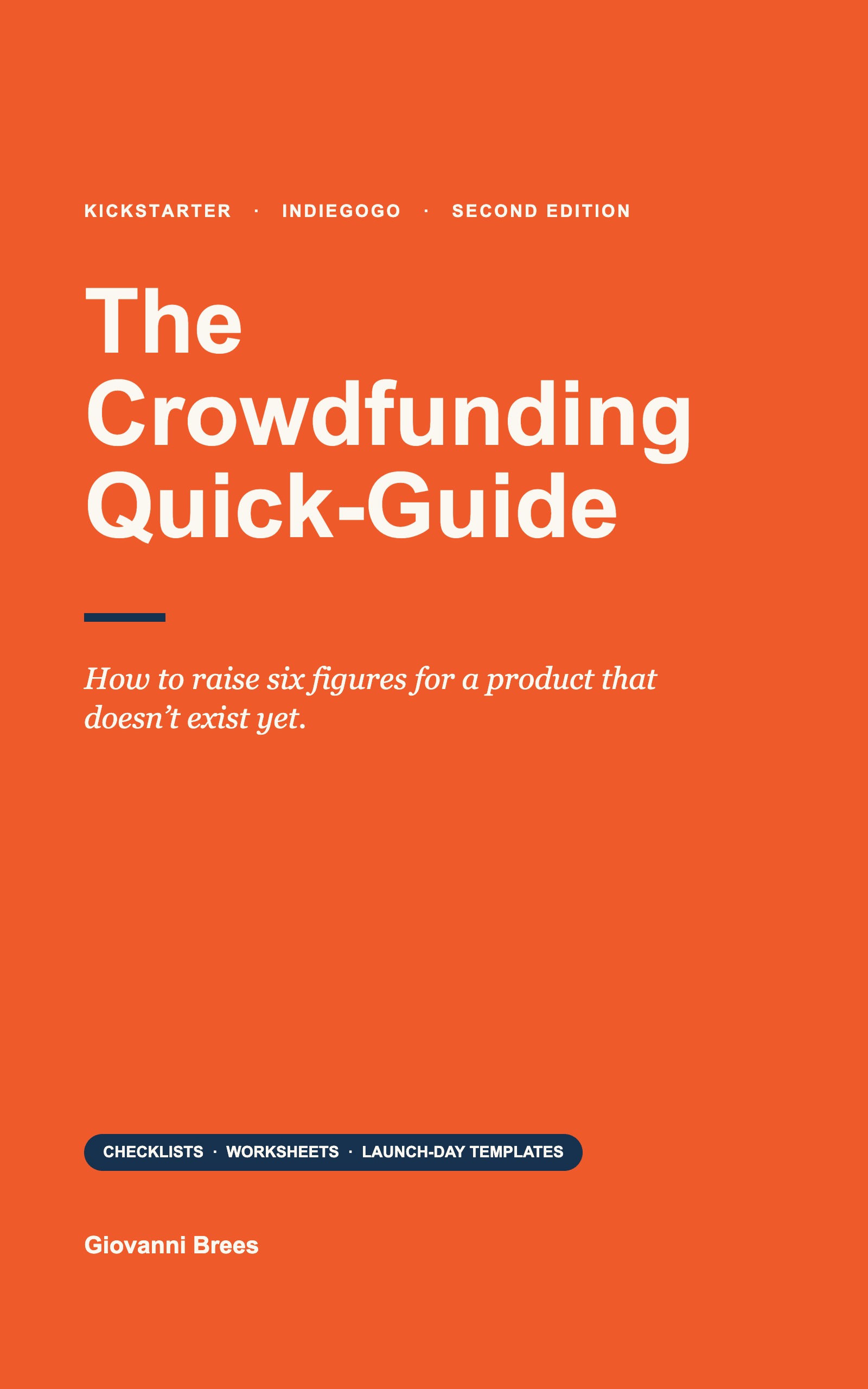
Read it alongside the pricing, platform and fulfillment chapters, not instead of them.
Get the book on Amazon →Reviewer outreach: the game-specific pre-launch engine
Game reviewers are one of the most powerful pre-launch tools in tabletop, far more than in most product categories. A positive review from a respected YouTube channel can drive thousands of backers on its own. The key is timing and targeting.
{{ reviewerSvg }}Send preview copies at least six to eight weeks before launch, with an embargo one to two weeks before launch. The reviewer needs time to play properly, film and publish, so the review is generating search traffic and BGG discussion going into launch day rather than arriving three weeks after people have decided. A review that drops two weeks out, builds views, gets shared in the forums and links to your pre-launch sign-up page is what drives VIP sign-ups at scale.
Target reviewers whose audience matches your game. A gateway game goes to channels that cover accessible games. A heavy euro goes to channels that cover complex strategy. Relevance over reach, always. Some reviewers charge for coverage and some don't; disclosure norms are strong and most say whether a copy was provided. A genuine positive review from a credible channel is worth far more than a paid five stars from someone who clearly hasn't played. If a reviewer passes, respect it. It means the game isn't right for their audience.
Prototypes, playtesting and the Print and Play
For games, the prototype proves a design, a ruleset and an experience, not just a manufacturing concept. The community is unforgiving of games that clearly weren't finished before they went to campaign. Playtest beyond your friend group. Find strangers at game café events, in Tabletop Simulator sessions, in the BGG playtest forums, and put the game in front of people with no social obligation to be kind. Their honest feedback on what is confusing, unbalanced or simply not fun makes the game better and far more fundable.
A Print and Play, a free PDF people can print and play at home, is optional but powerful. It lets potential backers try before they commit, which sounds risky but in practice sharply increases conversion among people who try it and enjoy it. It also generates community discussion, social sharing and BGG content before the campaign. Many successful game campaigns release a PnP months ahead and let the community do much of the pre-launch work.
Reward tiers for games: the all-in pledge
Games are famous for the all-in pledge: a single tier bundling the base game, all expansions, deluxe components and every stretch goal, at a modest discount to buying separately. It is popular because it lifts the average pledge and simplifies the choice for committed fans. It is dangerous because every stretch goal you unlock ships inside it, to every all-in backer, at the end of the campaign.
A typical structure: a digital-only tier for PDF rules and printable content as an accessible entry point; a base game tier; a deluxe tier with upgraded components; and the all-in. On GameFound, the Optional Buy List lets a base-game backer add expansions without a separate tier for every combination, which keeps the ladder short and the social proof concentrated.
{{ allinSvg }}Cost the all-in against the final projected backer count, not the launch-day one, and include the freight and duty impact of the heavier, larger box. A deluxe edition that adds a kilogram of metal coins can move an entire pledge into a higher shipping tier for every international backer. That is a stretch-goal decision with a logistics bill attached.
Stretch goals that do not sink the campaign
Stretch goals are more central to games than to any other category, and they are the most common way a funded game turns into a loss. The safe ones add perceived value with little per-unit cost or complexity: upgraded card stock, a better insert, linen finish, art upgrades, a small promo card, a solo mode in the rulebook. The dangerous ones add components, molds, weight or production steps: new miniatures, a second board, metal coins for everyone. Those are new products, and they delay delivery for every backer.
Reveal goals one or two at a time so each unlock is a fresh reason to share. Space them so the campaign has something to celebrate every few days through the middle stretch. And keep a private list of goals you could cut if freight quotes come in high. Backers forgive a goal that was never announced. They do not forgive one that was promised and quietly dropped.
Fulfillment: the part that makes or breaks a game publisher
Games are heavy, boxed, often multi-SKU, and they ship worldwide to backers who expect customs-friendly delivery. Regional fulfillment hubs in the US, EU, UK, Canada and Australia are standard practice, so that an EU backer is not hit with import VAT at the door. Get freight and duty quotes for your actual box size and weight to each region before you set pledge prices, and show shipping clearly on the page, per region. "Shipping charged later in the pledge manager" is accepted in tabletop, but publish an honest estimate range anyway. Experienced backers will ask, and vague answers cost pledges.
Use a proper pledge manager. GameFound and BackerKit include one; on Kickstarter you will want BackerKit or a similar tool to collect shipping, handle add-ons and manage address changes over the months between campaign and delivery. Plan for the timeline to be long. Manufacturing a game in Asia, shipping by sea and distributing from regional hubs is routinely nine to twelve months. Say so on the page, and then communicate monthly whether or not there is news.
Beyond board games: RPGs and miniatures
Most of this applies to card and board games, which are the largest segment. Tabletop roleplaying games and supplements have a vibrant crowdfunding community with lower fulfillment complexity, since much of the value is in PDFs and print-on-demand hardbacks, and a strong audience on specific channels and forums. Miniatures games are a different beast: the highest-grossing campaigns in the category, but also the most demanding on sculpting, tooling, lead times and freight. If you are launching miniatures, double every timeline in this article and treat the stretch-goal section as a warning rather than advice.
The game campaign readiness check
Before you set a date, make sure you can say yes to all of these. The rules have been played by strangers and the confusing parts rewritten. The BGG listing is live and you have posted in the forums as a designer for at least two months. Preview copies are with six to ten relevant reviewers under embargo. A pre-launch page is collecting sign-ups and deposits, and the reviewer embargo lifts one to two weeks before launch to feed it. The reward ladder has four tiers or fewer plus add-ons. Every stretch goal on the list has a per-unit cost and a shipping impact next to it. You have freight and duty quotes to your top five regions. And you have a pledge manager chosen. If any of those is a no, you have found your next job.
The game campaign page: what is different
Everything in the campaign page chapter applies, and games add three things. First, gameplay. Backers want to see the game being played, not just the components being admired: a two-minute "how to play" video alongside the hero video, and a link to a full playthrough from a reviewer. Second, the component list, in full, with photos of the actual prototype pieces and a clear note on which are final and which will be upgraded. Experienced backers read this section like a contract. Third, the rulebook. Link the current draft. A publisher confident enough to publish the rules before the campaign is a publisher the community trusts.
Stretch goals get their own visual section, usually a vertical track with locked and unlocked tiles, updated the moment a goal is hit. And the shipping section needs a table by region with an honest estimate, plus a line on VAT handling. In tabletop, "EU friendly" and "VAT included" are not details. They are deciding factors.
After the campaign: the tabletop-specific tail
Games have a longer and more profitable tail than most products if you plan for it. Late pledges on GameFound and Kickstarter keep selling for months, especially once reviews of the final production copy appear. The pledge manager is where add-on revenue happens; many game campaigns add 20 to 30% to their total there. And the second campaign, an expansion or a reprint with a new edition, launches to a list of people who already own the base game and already trust you to deliver.
Keep the BGG page alive through fulfillment with production photos, factory updates and the occasional honest delay note. Ship review copies of the production version to the same reviewers before retail. And when the boxes land, ask backers to post their unboxing on BGG and tag you. That wave of owner photos is the pre-launch marketing for campaign two, and it is free.
Questions people ask
Should I launch my board game on Kickstarter or GameFound?
Kickstarter if your game has appeal beyond hobbyists and you need mainstream discovery, especially for a first campaign with a small list. GameFound if your offer is complex (multiple editions, many add-ons, bundles), your audience is entirely gamers, or you have a community from a previous campaign. BackerKit is a strong, growing third option.
When should I send my board game to reviewers?
Six to eight weeks before launch, with an embargo one to two weeks before launch. The reviewer needs time to play properly, film and publish, so the review builds views and BoardGameGeek discussion going into launch day and links to your pre-launch sign-up page.
What is an all-in pledge?
A single tier bundling the base game, all expansions, deluxe components and all stretch goals, usually at a modest discount to buying separately. It drives a high average pledge, but it must be costed against the full projected backer count including freight and duties, because every stretch goal you unlock ships inside it.
Do I need a Print and Play before launching a game campaign?
It is optional but powerful. A free print-at-home version lets potential backers try the game before pledging, which sharply increases conversion among people who enjoy it, and it generates BGG content and social discussion months before launch.
How do stretch goals work for board games without losing money?
Choose upgrades with high perceived value and low per-unit cost: upgraded card stock, a better insert, art upgrades, a small promo. Avoid new components that add molds, weight or shipping tiers. Cost every goal against projected total backers before announcing it, and reveal them one at a time.
Why is board game fulfillment harder than other products?
Games are heavy, boxed, often multi-SKU, and ship worldwide to backers who expect VAT-friendly delivery. Regional fulfillment hubs, customs-friendly shipping and a proper pledge manager are standard. Budget freight and duties before the campaign, not after.
Games get their own chapter. The other thirty still apply.
USP, pre-launch funnel, platform, pricing, the page, launch day, press, manufacturing and fulfillment. With a checklist at the end of every chapter.
Buy on Amazon →

Founder of BoostYourCampaign, one of the top three crowdfunding marketing agencies in the world, and author of The Crowdfunding Quick-Guide. His teams helped creators raise more than $600 million on Kickstarter and Indiegogo.